June 17th, 2026
Kohlrabi
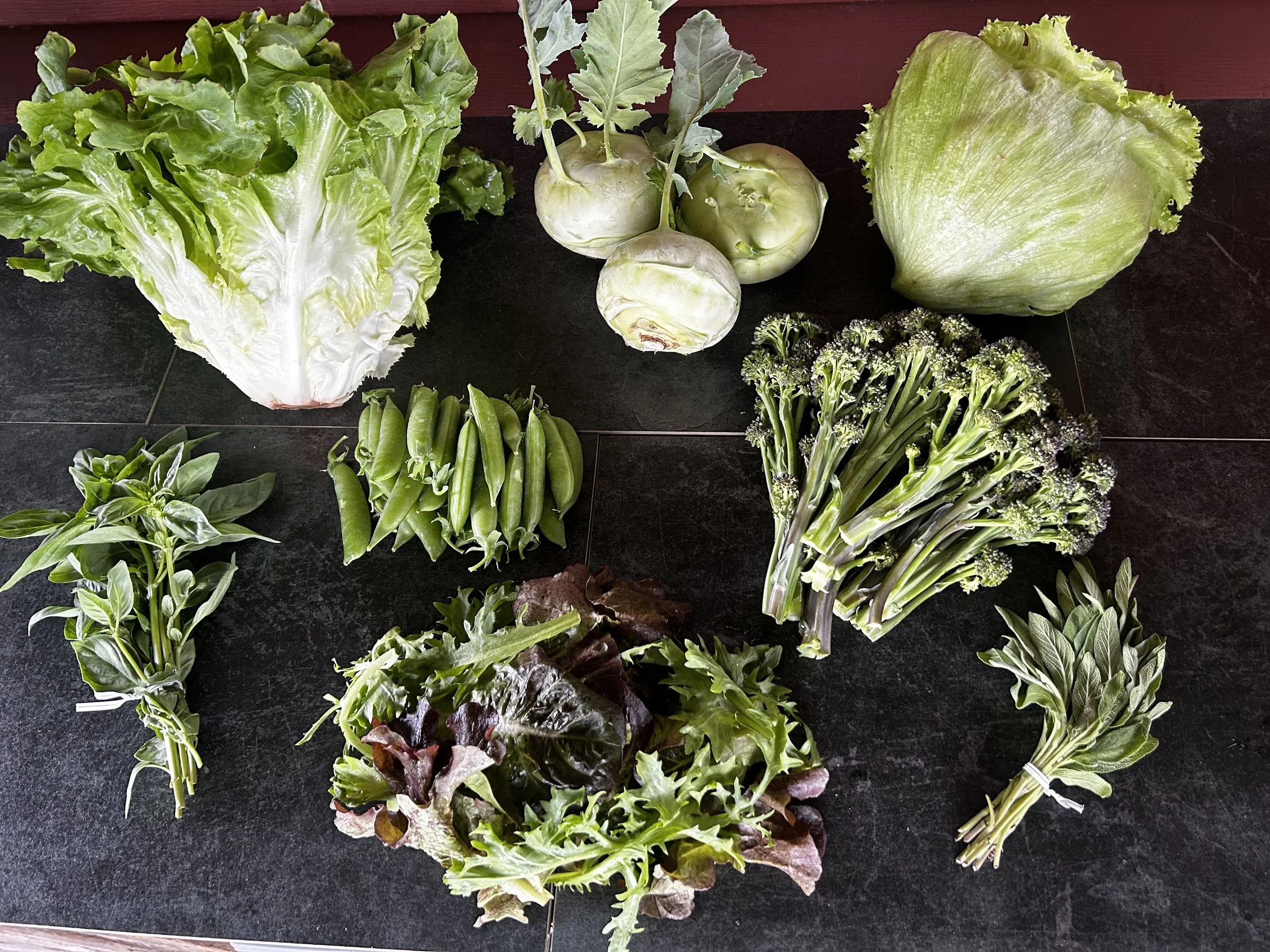
Escarole
Head Lettuce
Broccolini
Sugar Snap Peas (Bayview got them last week)
Sage
Basil
Salad Mix
Kohlrabi - has a similar flavor to broccoli and the texture of a potato or an apple. Unlike a potato, kohlrabi can be eaten raw. I definitely recommend peeling your kohlrabi. Skip the veggie peeler and use a paring knife knife - it’ll go way faster. If eating raw, shred, cut into matchsticks, or into thin slices. You can also treated it like a potato and cut it into bigger chunks to roast or boil it. Our favorite way to eat it is raw, cut into thin slices with some cheese slices or dipped in hummus. This is a great resource for cutting and prepping kohlrabi! This is the only time you’ll get kohlrabi this season, so enjoy it - or be thankful its the only time you’re getting it ;)
Basil - stores best at 50-60 F. Depending on the season and variety of your basil, it can be sensitive to the cold fridge and turn black. The best way we’ve found to store basil (and all of the bunched herbs we will give you) is to remove the twist tie and store them in a jar or a vase like you would a bouquet of flowers, outside of the fridge.
Escarole - W'e’re on a chicory kick! Escarole is endive’s sibling, but has broader leaves and a sweeter taste. They make a kick ass Caesar Salad, are sturdy enough to hold up to the grill, and even give a turkey sandwich the crunch it needs. The blanched, lower halves of the leaves can even be a gorgeous addition to minestone soup - according to legend by Workshare Greg (whose family lived at and worked on our farm before us!!!)
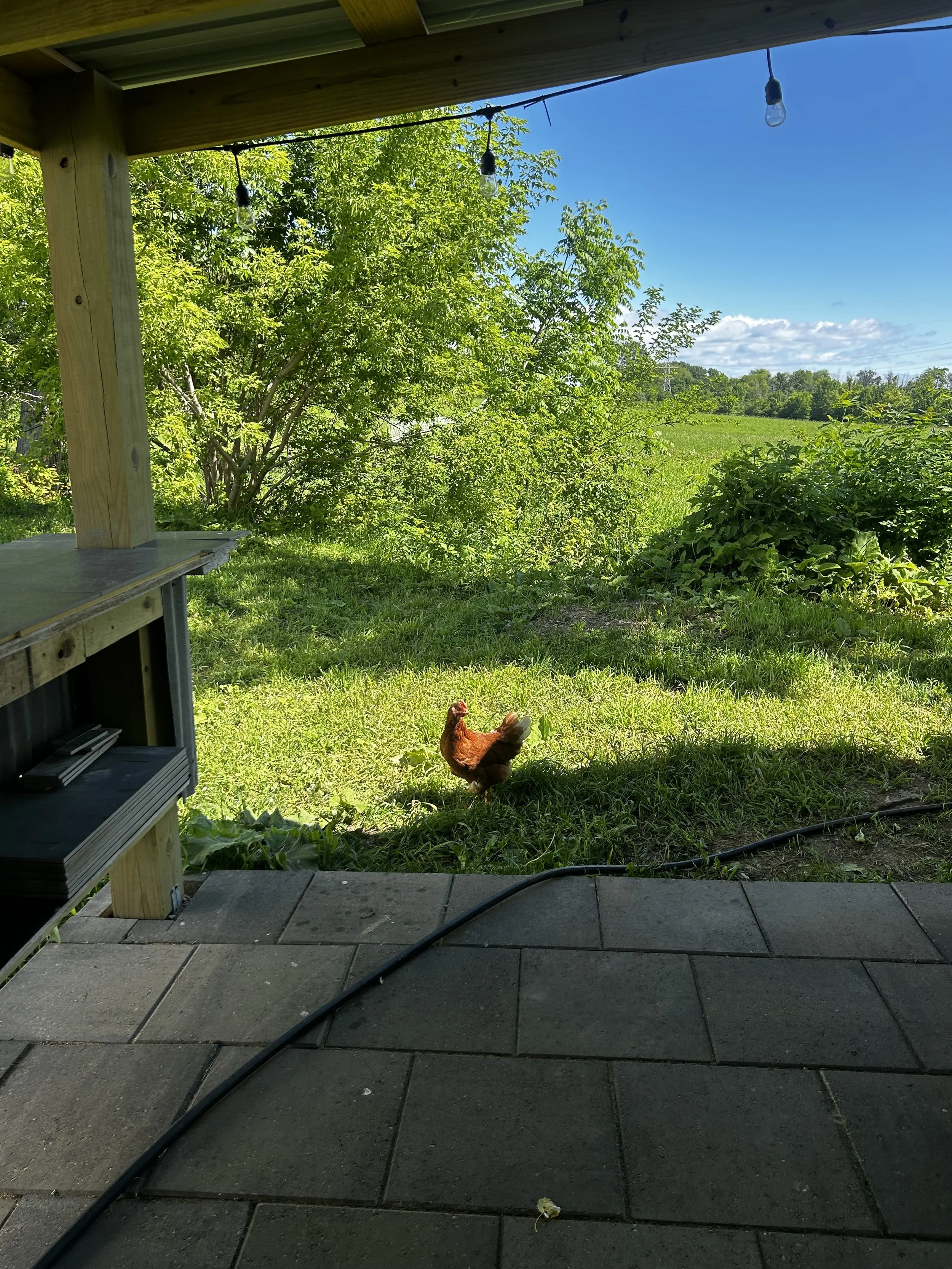
There’s always one chicken that escapes on the daily. Some eggs would be nice…
Recipes to try
Spicy Kimchi Slaw (sub kohlrabi for daikon radish!)
Crispy Apple and Kohlrabi Slaw
This being our third week, I figured we’d take care of some housekeeping and talk about crop storage and how to make your veggies last as long as possible and maintain their nutritive qualities.
Most of the crops we grow have a surprisingly long shelf life. The key to preserving the life of the vegetables is all about how they are stored, starting in the field. The night before harvest, we make sure to irrigate everything that will be harvested the next morning, so that it can take up water at night. Then in the morning, we begin harvesting early, before the sun gets hot. Harvesting when the cool morning dew is still on the plants helps them stay crisp and fresh as they make their way to your table. When a vegetable is harvested, it is full of what we call “field heat”. When a plant is no longer connected to the soil, the field heat needs to be removed quickly. Immediately after harvesting, we submerge, soak, or spray the crops with our cold well water to release field heat. We then put the crates of harvested vegetables in our walk-in cooler, and return to the field to harvest everything on the list for that day.
We take a great deal of time making sure that your produce comes to you as clean as possible. This is not only to provide you with a clean and tidy box, but thoroughly cleaning each crop with very cold water helps to keep the veggies as fresh as possible. As we hand the them over to you, we wanted to provide some tips for keeping their vitality as long as possible.
Take a few minutes to look this over if you can, and if you’re ever in doubt, put your produce in a plastic bag or a glass or plastic container.
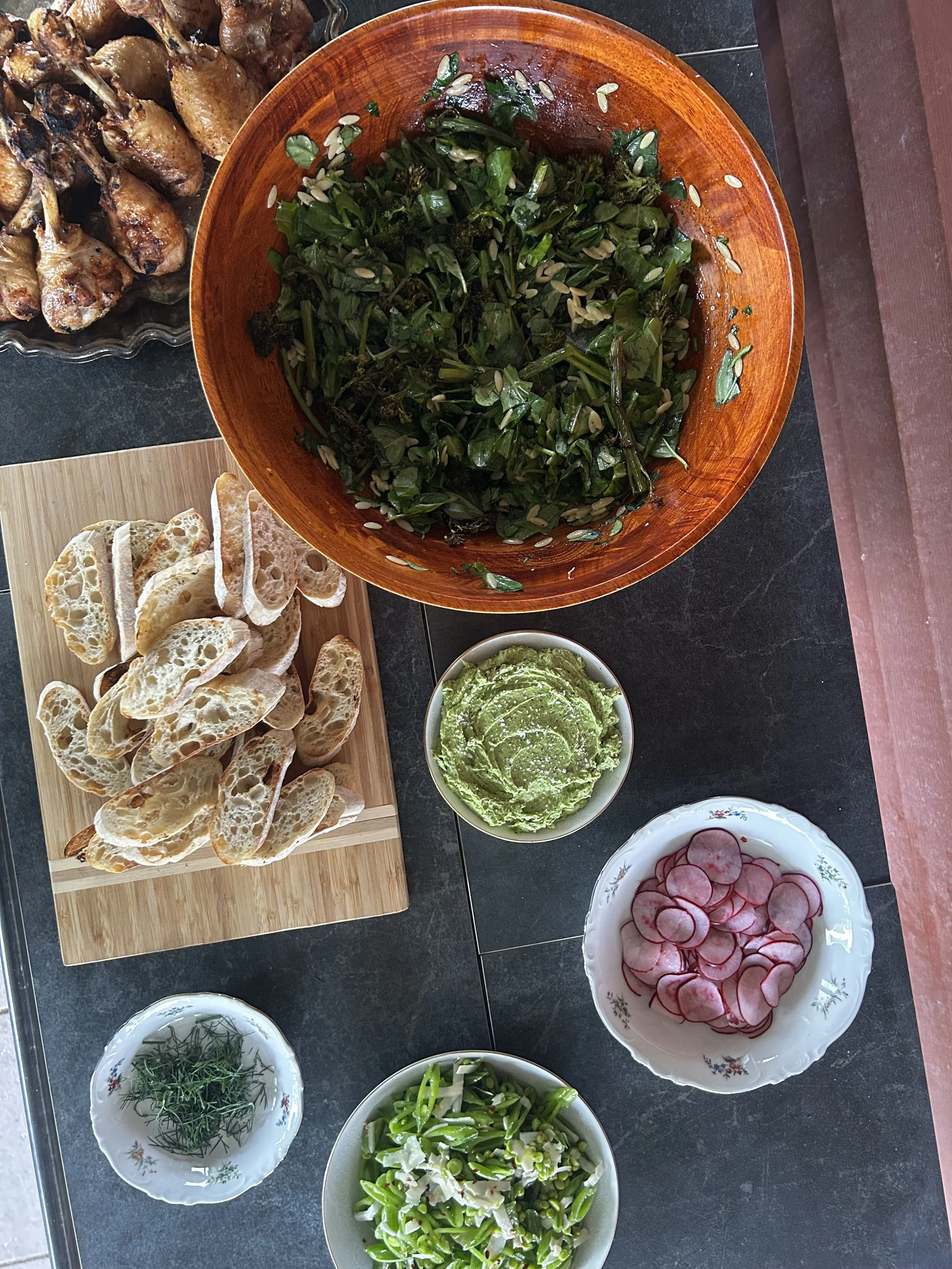
We had a potluck at home the other night. Alex and Ali made a salad with roasted broccolini, orzo, escarole, arugula, parsley, and basil; Sam grilled up some chicken drumsticks (he calls them “lolllipops”), and I made some toasts with herb butter, pickled radishes, and dill, and a mini sugar pea and asiago cheese salad. If you ever don’t know what to do with your herbs, herbed butter is the best! Just soften your butter, and add the herbs and butter to a food processor with salt, pepper, and maybe some lemon zest if you’re feeling fancy. Keeps for about a month IN THE FRIDGE!! Herbs reduced the shelf life of butter.
CROP STORAGE AND TIPS
This resource is an ongoing project, using mostly our own home recipes. We do take the challenge to cook seasonally seriously, so most of the recipes you will find use crops we grow, but can be adapted. Most recipes are simple; we know most folks are busy, and the commitment to CSA is enough in itself without elaborate recipes that are time-consuming.